- Connect Us:
- +91-9414816181
- info@rajasthantaxirental.com

Ranthambore Safari Booking: A Complete Travel Guide from Jaipur

Jaipur to Mehandipur Balaji Distance by Road | Best Cab Service
June 20, 2026
Best Trekking Places in Jaipur: Trails, Hidden Gems and Complete Guide
June 25, 2026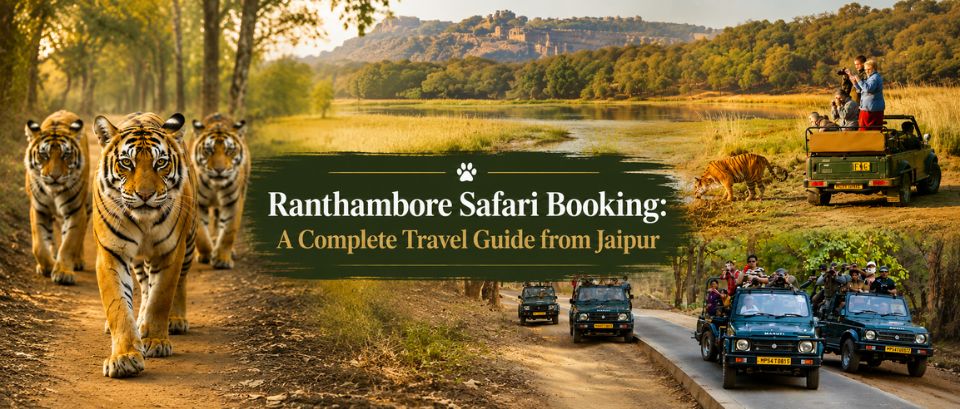
Rajasthan is not just about golden forts and royal palaces. Hidden within this land of legends is one of India’s most thrilling wildlife destinations. Ranthambore is a name that every nature lover holds close to their heart. Picture yourself sitting in an open jeep, moving slowly through a dense jungle trail, and then suddenly, a magnificent Royal Bengal Tiger walks out from behind the trees and pauses by the water. That single moment makes every mile of travel completely worth it.
If you are based in Jaipur or planning a trip from there, Ranthambore is one of the best weekend escapes you can choose. Just a few hours by road, this legendary jungle offers encounters with nature that stay with you forever. This guide covers everything you need to know, from Ranthambore safari booking to travel routes, distances, wildlife facts, and practical tips, so you can plan a smooth and memorable trip.
Quick Overview: Ranthambore National Park
Ranthambore National Park safari is widely considered one of the finest wildlife experiences in all of Asia. The park sits in the Sawai Madhopur district of Rajasthan and stretches across approximately 1,334 square kilometers of rugged terrain. It was first established as the Sawai Madhopur Game Sanctuary in 1955. In 1973, it became one of the original nine reserves under India’s Project Tiger initiative, and it was formally declared a National Park in 1980.
What makes Ranthambore stand apart from many other parks is the visibility of its tigers. Unlike dense jungles where sightings are rare, Ranthambore’s relatively open landscape of dry deciduous forests, grasslands, and lakes gives visitors a strong chance of spotting tigers during daylight hours. As of 2022, the park was home to over 69 tigers, and that number has continued to grow thanks to dedicated conservation efforts. Enjoy a stress-free journey with our trusted Car Rental Service, offering everything from sedan cars to SUVs and Tempo Travellers for families, groups, and corporate travelers.
Jaipur to Ranthambore Distance: Planning Your Road Trip
For travelers flying into Jaipur or starting their journey from the city, the good news is that Ranthambore is very accessible. Jaipur to Ranthambore National Park distance by car is approximately 180 km and the drive typically takes between 3.5 to 4 hours, depending on traffic and road conditions.
This makes it one of the most popular weekend getaways from Jaipur, and with the right planning, the drive itself becomes a scenic and enjoyable part of the experience.
Two Main Routes from Jaipur to Ranthambore:
| Route | Distance | Estimated Time | Road Quality |
|---|---|---|---|
| Via Tonk – NH552 – Sawai Madhopur | ~180 km | 3.5 to 4 hours | Smooth, highly recommended |
| Via Dausa – Lalsot – Sawai Madhopur | ~190 km | 4 to 4.5 hours | Scenic but with some rough patches |
The Tonk route via NH552 is the most popular and well-maintained road. It offers a comfortable drive through rural Rajasthan with clean stretches of highway. The Dausa route is slightly longer but passes through historically interesting towns if you are willing to make a few stops along the way.
Travel Tips for the Road Trip:
- Start early in the morning to avoid city traffic and enjoy cooler temperatures
- Carry water and snacks as some stretches have limited stops
- Fuel up in Jaipur or Tonk as petrol pumps become sparse on certain routes
- If you do not have a personal vehicle, taxis from Jaipur are readily available in options ranging from sedans like Swift Dzire and Etios to SUVs like Innova Crysta for families and groups
Jaipur to Sawai Madhopur Distance: Your Base Camp Stop
Many travelers ask whether they should go directly to the park or stop at Sawai Madhopur first. The answer depends on your timing and accommodation choice. Jaipur to Sawai Madhopur distance is approximately 160 to 170 km, making it slightly shorter than the full journey to the park gate.
Sawai Madhopur is the nearest town to Ranthambore and serves as the primary base for visitors. It has a good range of hotels, restaurants, local markets, and transport options. The town has its own cultural character with winding streets and a relaxed pace that gives you a taste of authentic Rajasthan before you step into the wild.
If you are arriving by train, Sawai Madhopur Junction (SWM) is directly connected to major cities including Jaipur, Delhi, Mumbai, and Agra. Multiple express trains run daily on these routes, making the train a fast and convenient option for those who prefer rail travel.
Sawai Madhopur to Ranthambore Distance: The Final Stretch
Once you reach Sawai Madhopur, the park is almost at your doorstep. Sawai Madhopur to Ranthambore distance is just 11 to 14 km, which takes roughly 20 to 30 minutes by road. Taxis, auto-rickshaws, and hotel-arranged cabs are all available from Sawai Madhopur to take you to the forest gate without any hassle.
A practical tip: try to book your accommodation either within Sawai Madhopur or close to the park entry gates. This ensures you can reach the safari departure point on time, especially for early morning slots where delays can mean missing your entry.
Ranthambore Wildlife Sanctuary: What Lives Here
The Ranthambore wildlife sanctuary is far more than a tiger reserve. It is a living, breathing ecosystem where every visit offers something different. While the Royal Bengal Tiger is the star attraction, the park shelters a remarkable diversity of wildlife that keeps nature enthusiasts engaged throughout every safari.
Wildlife You Can Spot at Ranthambore:
- Royal Bengal Tiger (the park’s most iconic resident)
- Leopard and Sloth Bear
- Striped Hyena, Jungle Cat, and Caracal
- Sambar Deer, Chital, Nilgai (Blue Bull)
- Wild Boar, Indian Jackal, and Common Mongoose
- Marsh Crocodile (frequently seen basking near lakes)
- Over 300 species of resident and migratory birds, including Eagles, Kingfishers, Sarus Crane, Painted Spurfowl, and Great Horned Owl
The park’s landscape is equally impressive. Rolling hills, ancient ruins, seasonal lakes like Padam Talao and Malik Talao, and the dramatic backdrop of the Aravalli and Vindhya mountain ranges make every game drive visually stunning even when tigers are not in sight.
One feature that makes Ranthambore truly unique is the historic Ranthambore Fort sitting right inside the park boundaries. Declared a UNESCO World Heritage Site, this 10th-century fort offers panoramic views of the jungle below and houses the famous Trinetra Ganesh Temple, which draws both pilgrims and history lovers.
Safari Zones at Ranthambore: Which One Should You Pick?
The park is divided into 10 safari zones. Each zone has its own landscape, wildlife population, and character. Zones 1 to 5 are the core zones and are generally considered best for tiger sightings. Zones 6 to 10 are buffer zones that were added later as the park expanded. These buffer zones are less crowded and offer a peaceful, more immersive jungle experience.
| Zone | Best Known For |
|---|---|
| Zone 1 | Grasslands, lakes, peaceful environment, regular tiger presence |
| Zone 2 | Multiple water holes, good for leopard sightings too |
| Zone 3 | Most popular zone, highest tiger sighting reports |
| Zone 4 | Open banks and lakes, easy to spot tigers near water |
| Zone 5 | Close to Ranthambore Fort, underrated and scenic |
| Zone 6 | Best among buffer zones, shares boundary with Zone 1 |
| Zone 7 to 10 | Quiet, diverse flora and fauna, fewer crowds |
It is important to note that zone allocation is not always in your hands. The Rajasthan Forest Department assigns zones through a computerized system. However, you can express your preference during booking, and it may be honored based on availability. If tiger sightings are your primary goal, book as early as possible and try for Zones 3 or 4.
Ranthambore Safari Booking: Step-by-Step Process
Securing your Ranthambore safari booking in advance is the single most important step in your trip planning. Safari slots fill up fast, especially during peak season, and last-minute bookings often result in disappointment.
How to Book Online:
- Visit the official Rajasthan Forest Department website or an authorized travel operator platform
- Select your preferred safari date, shift (morning or evening), and vehicle type (Jeep or Canter)
- Enter visitor details for each traveler: full name, age, gender, and government ID number
- For Indian nationals: Aadhaar card, PAN card, Voter ID or Driving License
- For foreign nationals: a valid Passport
- Complete the full payment online
- Download and print your safari permit (mobile phones are not allowed inside the park, so a hard copy is mandatory)
- On safari day, carry the original ID proof used during booking for verification at the gate
Important Booking Rules:
- Bookings open up to 90 days in advance
- All confirmed bookings are non-refundable and non-transferable
- Children aged 4 and under are exempt from safari fees
- Zones 1 to 5 remain closed on Wednesdays and Zones 6 to 10 on Tuesdays
- Arrive at the safari boarding point at least 30 minutes before your scheduled slot
Jeep Safari vs Canter Safari: Which One to Choose?
Both options have their own advantages. Your choice should depend on your group size, budget, and the kind of experience you are looking for.
| Feature | Jeep Safari (Gypsy) | Canter Safari |
|---|---|---|
| Capacity | 6 passengers | 20 passengers |
| Best For | Small groups, photographers | Large groups, budget travelers |
| Access | Narrow jungle trails | Main jungle roads |
| Cost | Higher per person | More affordable |
| Availability | All 10 zones | Not available in Zones 7 and 8 |
| Experience | Intimate, flexible | Social, wider view from height |
For wildlife photographers and those who want a more personal experience, the Jeep Safari is the clear winner. For families traveling in a larger group on a tighter budget, the Canter Safari still delivers an exciting and memorable time inside the park. For a smooth and memorable Rajasthan journey, choose our professional Taxi Service in Jaipur, available for one-way trips, round trips, airport transfers, and customized sightseeing tours.
Best Time to Visit Ranthambore
The park is open from October 1st to June 30th every year and closes during the monsoon months of July, August, and September. Within the open season, different months offer different experiences.
| Season | Months | What to Expect |
|---|---|---|
| Cool & Pleasant | October to February | Comfortable temperatures, active wildlife, great for photography |
| Peak Tiger Season | March to June | Hot weather, but tigers frequently visit water bodies, with the highest sighting chances |
| Monsoon Closure | July to September | Park closed to visitors |
March to June is widely regarded as the best time for tiger sightings. As temperatures rise and water sources shrink, tigers are drawn to the remaining lakes and ponds within the park, making them much easier to spot. October to February is ideal for those who prefer cooler weather and want to combine wildlife with birdwatching.
Safari Timings at a Glance
| Season | Morning Safari | Evening Safari |
|---|---|---|
| October to February | 6:30 AM to 10:00 AM | 2:30 PM to 6:00 PM |
| March to June | 6:00 AM to 9:30 AM | 3:00 PM to 6:30 PM |
Timings adjust slightly based on sunrise and sunset throughout the year. Always confirm exact timings when booking or through your accommodation.
Beyond the Safari: Other Things to Do at Ranthambore
Your visit to Ranthambore does not have to end when the safari does. The area has several other experiences worth your time.
Ranthambore Fort: A 10th-century UNESCO-listed fortress standing dramatically inside the forest. The climb to the top rewards you with breathtaking views over the jungle and surrounding hills. The Trinetra Ganesh Temple inside the fort is one of the most visited pilgrimage spots in Rajasthan.
Padam Talao and Surwal Lake: These scenic water bodies are excellent for birdwatching, quiet photography walks, and peaceful evenings by the water.
Kachida Valley: A lesser-visited spot that is particularly good for leopard and sloth bear sightings away from the main safari routes.
Rajiv Gandhi Regional Museum of Natural History: A well-organized museum near Sawai Madhopur that gives you a detailed look at the region’s ecological and cultural heritage. Perfect for a post-safari visit.
Local Village Experiences: Many resorts near the park offer guided village walks, traditional Rajasthani folk music evenings, and hands-on cultural activities like pottery and cooking sessions.
Frequently Asked Questions
Q1. How far in advance should I complete my Ranthambore safari booking?
It is strongly recommended to book at least 60 to 90 days before your visit, especially during peak season from October to March. Zones 3 and 4 in particular fill up very quickly, and last-minute availability is rarely guaranteed.
Q2. What is the exact Jaipur to Ranthambore distance by car and which route is best?
The Jaipur to Ranthambore National Park distance by car is approximately 180 km. The best route is via Tonk and NH552, which offers smooth roads and takes around 3.5 to 4 hours. This is the most comfortable option for a road trip.
Q3. Is there a guarantee of seeing a tiger during the safari?
Tiger sightings are never 100% guaranteed since this is a wild reserve, not a zoo. However, Ranthambore has one of India’s highest tiger densities, and the probability of a sighting is relatively high, especially from March to June when tigers gather near water sources. Zones 3 and 4 consistently report the most sightings.
Q4. What is the approximate cost of a Ranthambore safari?
A Jeep Safari typically costs between Rs. 1,500 and Rs. 2,500 per person, while a Canter Safari ranges from Rs. 1,000 to Rs. 1,500 per person. Prices vary based on the zone, shift, and whether you are an Indian national or a foreign visitor.
Q5. Should I stay in Sawai Madhopur or closer to the park gate?
Both options work well since Sawai Madhopur to Ranthambore distance is only 11 to 14 km. Staying near the park gate gives you a slight advantage for early morning safaris. Staying in Sawai Madhopur gives you more accommodation choices at varied price points. For first-time visitors doing multiple safaris, being closer to the park gate is the better choice.