- Connect Us:
- +91-9414816181
- info@rajasthantaxirental.com

Bhangarh Fort Story: History, Timings, Jaipur Distance & Travel Guide

Best Trekking Places in Jaipur: Trails, Hidden Gems and Complete Guide
June 25, 2026
Haunted Fort in Rajasthan: Explore Rajasthan’s Mysterious and Historic Forts
July 4, 2026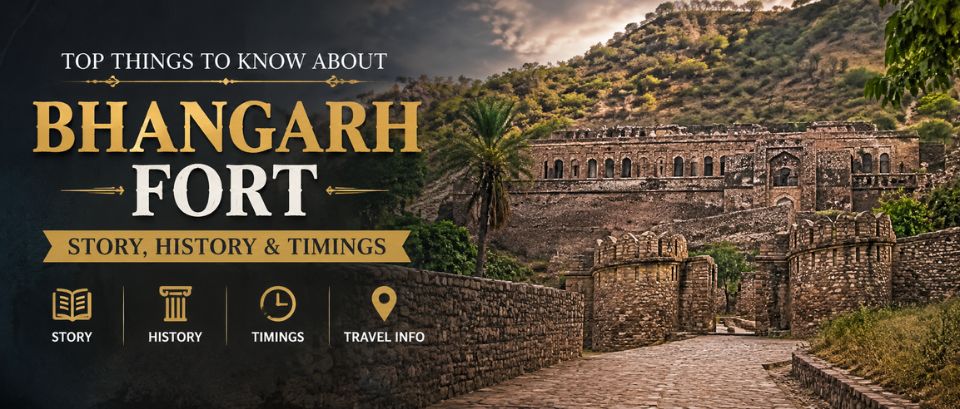
Rajasthan is home to some of India’s most magnificent forts, each carrying a unique story from the past. While forts like Amer, Mehrangarh and Chittorgarh are known for their royal heritage, one destination attracts visitors for a completely different reason. Hidden among the Aravalli Hills, Bhangarh Fort Story has earned a reputation as one of the most mysterious places in the country.
Thousands of tourists visit this historic site every year to admire its ancient ruins, beautiful temples and impressive architecture. At the same time, many travelers arrive with one question in mind. Is Bhangarh really haunted, or are the stories simply local folklore that have been passed down through generations?
The truth is that Bhangarh is much more than ghost stories. It is an important historical monument protected by the Archaeological Survey of India and offers visitors a chance to explore the glorious past of Rajasthan. If you are planning a road trip from Jaipur, this guide will help you understand its history, travel route, timings and the easiest way to reach the fort.
The Rise of a Historic Kingdom
The history of Bhangarh dates back to the late sixteenth century during the rule of the Kachwaha Rajputs. The town was established under the leadership of Raja Bhagwant Das for his younger son Madho Singh. Because of its strategic location between important trade routes, Bhangarh soon became a prosperous settlement where merchants, craftsmen and local communities flourished.
The town was carefully planned with wide streets, markets, temples, royal residences and gardens. Even today, visitors can easily notice how advanced the town planning was for that period. Walking through the ruins gives an idea of how lively this place must have been several centuries ago.
Unlike the popular myths, historians believe that political instability, repeated invasions and changing economic conditions played a major role in the decline of the town. Natural disasters and scarcity of water may also have contributed to its abandonment over time.
Bhangarh Fort History
The Bhangarh Fort history is filled with remarkable architecture and royal heritage. Although many buildings have turned into ruins, the layout of the ancient town is still clearly visible.
The entrance to the fort passes through massive gateways that once protected the kingdom from invaders. Inside the complex, visitors can explore the remains of royal palaces, temples dedicated to Lord Shiva, Hanuman and Gopinath, old marketplaces and residential structures.
One of the most interesting features of the fort is the palace situated at the highest point of the complex. From here, visitors can enjoy breathtaking views of the surrounding Aravalli Hills and the dense forest nearby.
The temples inside the fort continue to display beautifully carved pillars and detailed stonework, reflecting the exceptional craftsmanship of Rajput architecture. Every corner of the fort reminds visitors that Bhangarh was once a flourishing kingdom rather than simply a haunted destination.
The Legend Behind the Fort
Every historical monument has its own legend, and Bhangarh is no exception. The most famous Bhangarh Fort story revolves around Princess Ratnavati, whose beauty was said to be unmatched across the region. According to local folklore, a tantric magician named Singhia became deeply attracted to the princess. He wanted to marry her and allegedly tried to use magical powers to make her fall in love with him.
The princess discovered his intentions before his plan could succeed. Using her intelligence, she turned the spell against the magician himself. As the story goes, the magical object rolled back and crushed the tantric. Before taking his final breath, the magician is believed to have cursed the entire kingdom, declaring that no one would ever be able to live peacefully there again.
Although this tale has become one of Rajasthan’s most famous legends, historians have never found any historical documents confirming that the incident actually took place. Even today, local residents narrate this story to visitors, making it an important part of Bhangarh’s cultural identity.
Is the Fort Really Haunted?
The mysterious atmosphere surrounding the ruins has made many people believe that Bhangarh Fort haunted stories are real. Visitors often describe an unusual silence inside the complex, especially during the early morning and evening hours. The abandoned buildings, broken palace walls and empty pathways create an environment that naturally feels mysterious. This unique setting has inspired countless documentaries, television shows and travel videos over the years.
However, there is no scientific evidence proving the existence of paranormal activity inside the fort. Government authorities have never declared the monument haunted. Instead, the restrictions placed on the fort are mainly related to visitor safety and monument conservation. Since the fort is surrounded by forest areas and many structures have become fragile over time, entry is prohibited after sunset.
Why Do People Believe It Is Haunted?
One of the most searched questions online is why is bhangarh fort haunted.
The answer lies in the stories that have been shared for generations rather than historical records.
Apart from the tale of Princess Ratnavati, another local legend speaks about a saint who lived near the fort. According to folklore, the saint permitted the construction of the town on one condition. No building should ever become tall enough for its shadow to fall upon his meditation place.
As the kingdom expanded, the palace reportedly grew taller than agreed upon. When its shadow reached the saint’s residence, he is believed to have cursed the entire settlement. Whether these stories are true or not, they continue to attract thousands of curious travelers every year. For many visitors, the mystery itself is the biggest reason to explore Bhangarh.
A Walk Through the Ancient Ruins
Exploring Bhangarh is like stepping into another era. The old marketplace still stretches along the main pathway leading toward the palace. Although the shops are now empty, their structure gives an idea of how busy the town once was. Visitors can also explore several temples that have survived the passage of time remarkably well. Their detailed carvings continue to impress history lovers and photographers alike.
The palace itself has partially collapsed, yet its remaining walls reveal the grandeur of the royal residence. From the upper levels, the surrounding hills create a peaceful landscape that contrasts sharply with the fort’s haunted reputation. Nature has gradually reclaimed much of the abandoned settlement. Trees, shrubs and wild plants now grow between ancient stone structures, making the site even more fascinating for photographers and explorers.
Bhangarh Fort Alwar Location
Located in the Alwar district of Rajasthan, Bhangarh Fort Alwar lies close to the famous Sariska Tiger Reserve. Its location makes it an excellent destination for travelers looking to combine wildlife, history and heritage in a single day trip. Many tourists visiting Sariska also include Bhangarh in their itinerary because both attractions can be comfortably explored on the same route.
Jaipur to Bhangarh Fort Distance
If you are planning a road trip from Jaipur, reaching Bhangarh is quite convenient. The Jaipur to Bhangarh Fort distance is approximately 85 kilometres, depending on your starting point in the city. The journey usually takes around 2 to 2.5 hours by road.
The most preferred route is Jaipur, Dausa, Gola Ka Bas and Bhangarh Fort. The roads are in good condition, making the drive comfortable for families, couples and groups. Along the way, you will pass through beautiful rural landscapes, small villages and the scenic Aravalli hills, making the journey enjoyable.
Public buses are available up to nearby towns, but they do not provide direct access to the fort. After getting off the bus, visitors usually need to hire a local vehicle to reach the entrance. This is why many travellers choose a private taxi for a hassle-free experience.
Bhangarh Fort Timings
Before planning your visit, it is important to know the Bhangarh Fort timings. The monument generally remains open from 6:00 AM to 6:00 PM, which means visitors can enter only between sunrise and sunset.
Entry after sunset is strictly prohibited by the Archaeological Survey of India. Many people believe this rule exists because of ghost stories, but the actual reason is visitor safety. The fort is surrounded by forest land, and several structures inside have become weak over time. Restricting entry after dark helps prevent accidents and protects the historical monument.
Morning is considered the best time to visit because the weather is pleasant, the lighting is ideal for photography and the crowd is comparatively smaller.
Best Time to Visit Bhangarh Fort
The ideal season to visit Bhangarh is from October to March. During these months, Rajasthan experiences comfortable weather, making sightseeing much more enjoyable. Winter mornings offer clear skies and pleasant temperatures, allowing visitors to explore the fort without discomfort.
If possible, avoid visiting during the peak summer months from April to June, as daytime temperatures often exceed 40 degrees Celsius. The monsoon season also adds greenery to the surrounding hills, creating a beautiful backdrop for photography, although occasional rain may affect your travel plans.
Places to Visit Near Bhangarh Fort
A trip to Bhangarh becomes even more memorable when combined with nearby attractions.
Sariska Tiger Reserve
Located a short drive away, Sariska Tiger Reserve is one of Rajasthan’s famous wildlife destinations. Visitors can enjoy jungle safaris and may spot tigers, leopards, deer, nilgai and various bird species.
Chand Baori, Abhaneri
One of India’s oldest and deepest stepwells, Chand Baori is admired for its remarkable architecture and geometric design. It is a favourite destination among photographers and history enthusiasts.
Harshat Mata Temple
Situated near Chand Baori, this ancient temple is known for its beautiful carvings and historical significance.
Siliserh Lake
Visitors looking for a peaceful environment can spend some relaxing time at Siliserh Lake before returning to Jaipur.
Adding these attractions to your itinerary transforms a simple fort visit into a full day sightseeing experience.
Travel Tips for Visitors
To make your trip comfortable, keep the following tips in mind.
Wear comfortable walking shoes because the fort covers a large area.
Carry drinking water, especially during warmer months.
Keep sunglasses, sunscreen and a hat if you are visiting during the daytime.
Avoid climbing damaged walls or restricted sections of the monument.
Respect the rules issued by the Archaeological Survey of India.
Carry a camera because the fort offers excellent opportunities for landscape and heritage photography.
Start your journey early in the morning to avoid traffic and enjoy more time exploring nearby attractions.
Jaipur to Bhangarh Fort Taxi Service
The most convenient way to explore Bhangarh is by choosing a Jaipur to Bhangarh Fort Taxi Service. A private cab allows you to travel comfortably without worrying about bus schedules or changing vehicles.
Rajasthan Taxi Rental offers well-maintained cars driven by experienced chauffeurs who are familiar with the route and nearby sightseeing destinations. Whether you are travelling alone, with family or in a group, you can choose from Sedan cars, SUVs, Innova Crysta or Tempo Travellers according to your travel needs.
One of the biggest advantages of booking a taxi is flexibility. You can stop at Chand Baori, Sariska Tiger Reserve or any other attraction along the way without feeling rushed. This makes your journey more enjoyable and gives you enough time to explore Rajasthan at your own pace.

Why Choose Rajasthan Taxi Rental?
There are many transportation options available, but choosing a professional taxi service offers several benefits.
Professional and courteous drivers.
Clean and regularly maintained vehicles.
Comfortable travel for families and groups.
Affordable pricing with no hidden charges.
Flexible sightseeing packages.
Door-to-door pickup and drop service.
Easy booking process and reliable customer support.
These advantages help make your trip safe, convenient and stress-free.
Conclusion
Bhangarh Fort is not just famous because of its mysterious legends. It is a remarkable historical site that reflects the rich cultural heritage of Rajasthan. Its ancient temples, royal palace, ruined marketplace and peaceful surroundings make it a destination worth exploring.
Whether you are interested in history, architecture, photography or simply looking for a unique weekend getaway from Jaipur, Bhangarh offers an unforgettable experience. While the ghost stories continue to attract curious visitors, the true beauty of the fort lies in its historical significance and stunning landscape.
Frequently Asked Questions
Q1. Is Bhangarh Fort worth visiting?
Yes. Bhangarh Fort is one of Rajasthan’s most unique heritage sites, offering a combination of history, architecture and fascinating local legends.
Q2. How much time should I spend at Bhangarh Fort?
Most visitors spend around two to three hours exploring the palace, temples and surrounding ruins.
Q3. Can I visit Bhangarh Fort in one day from Jaipur?
Yes. It is one of the most popular one-day road trips from Jaipur and can easily be completed within a day.
Q4. Is there an entry fee for Bhangarh Fort?
The entry fee for Bhangarh Fort is ₹25 per person for Indian visitors and ₹200 per person for foreign visitors. Visitors carrying a video camera may need to pay an additional charge as per ASI rules.
Q5. Which is the best transport option for visiting Bhangarh Fort?
A private taxi is the most convenient option because it offers flexibility, comfort and allows you to explore nearby attractions during the same trip.