- Connect Us:
- +91-9414816181
- info@rajasthantaxirental.com

Jaipur Temples: Famous Religious Places and Must Visit Temples

Jaipur to Mount Abu Distance, Route, Time & Travel Tips
June 18, 2026
Jaipur to Mehandipur Balaji Distance by Road | Best Cab Service
June 20, 2026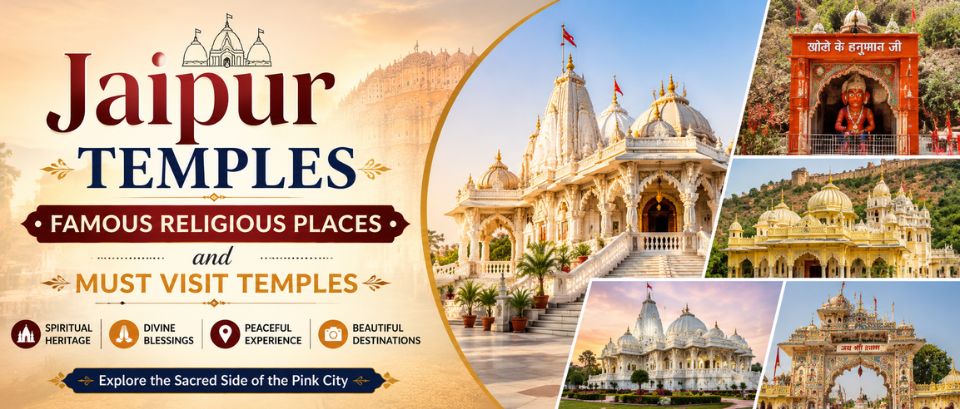
Jaipur, the Pink City of Rajasthan, is not just about forts, palaces, and colorful bazaars. Beneath its royal grandeur lies a deep spiritual soul. The city is home to some of the most revered Jaipur temples, which have drawn devotees and travelers for centuries. Whether you are seeking inner peace, divine blessings, or want to experience the cultural roots of Rajasthan, a temple tour in Jaipur will leave you with something truly unforgettable.
From ancient shrines nestled in the Aravalli hills to marble structures that glow under the evening lights, each temple in this city tells a story of faith, history, and devotion. If you are planning a visit and need a comfortable and reliable taxi service to explore these sacred places, Rajasthan Taxi Rental has got you covered.
Why Jaipur Is a Hub of Spiritual Tourism
The Kachwaha Rajput kings who ruled Jaipur were deeply religious. They built magnificent temples across the city and made sure that religion and royalty walked hand in hand. As a result, Jaipur religious places are not only architecturally stunning but also deeply rooted in Hindu traditions.
Festivals like Janmashtami, Ganesh Chaturthi, and Makar Sankranti see thousands of devotees pouring into the city from across India. The spiritual energy here is something you can genuinely feel in every lane and every temple courtyard.
Famous Temples in Jaipur You Must Visit
1. Govind Dev Ji Temple
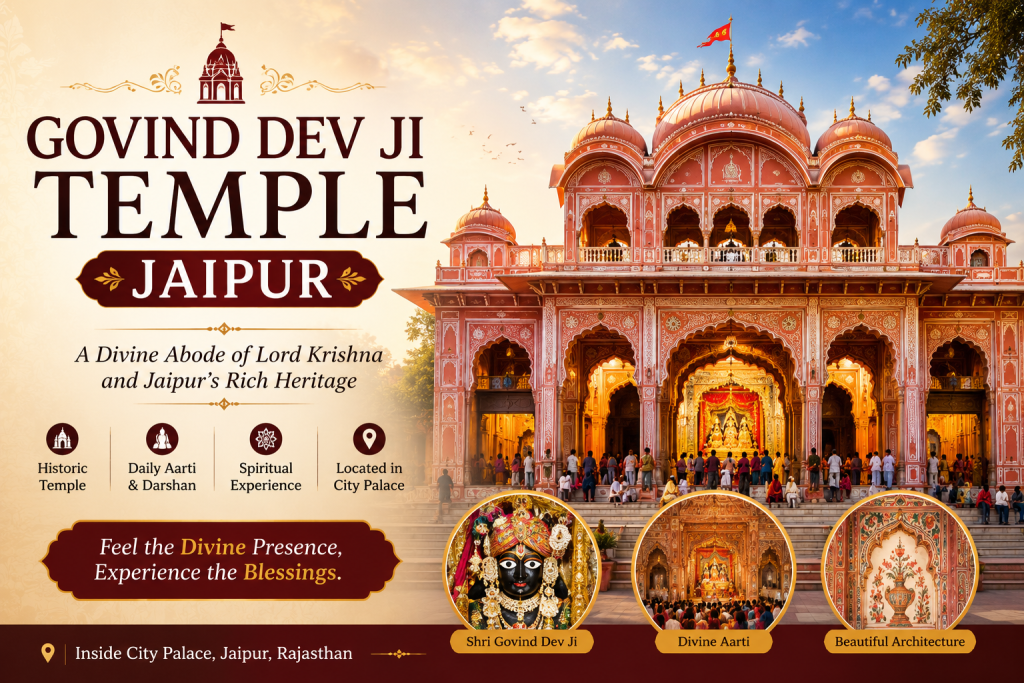
If there is one temple that defines the spiritual identity of Jaipur, it is the Govind Dev Ji Temple. Located inside the City Palace complex at Jalebi Chowk, this temple is dedicated to Lord Govind Dev Ji, a form of Lord Krishna. The idol is believed to be an exact likeness of Lord Krishna himself, made by Bajranabh, the great-grandson of Lord Krishna, over 5,000 years ago.
Maharaja Sawai Jai Singh II brought this sacred idol from Vrindavan to Jaipur in 1735 AD to protect it from Mughal destruction. He built his palace in such a way that he could see the deity directly from his royal chambers. The Famous Krishna Temple in Jaipur runs seven aartis daily, with the Mangala Aarti beginning as early as 4:45 AM and the last aarti concluding by 9:15 PM.
During Janmashtami, the celebrations here are among the most grand in all of Rajasthan, attracting massive crowds of devotees.
Entry is free. Darshan timings: 5:00 AM to 9:00 PM.
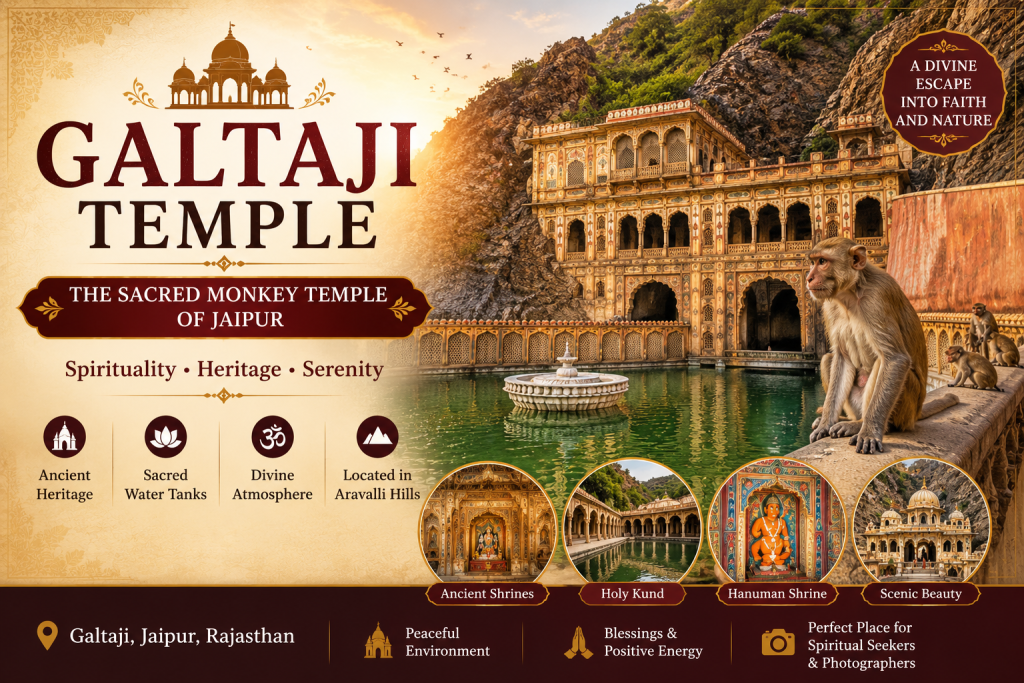
2. Galtaji Temple
Tucked into the Aravalli Hills about 10 km from the city center, the Galtaji Temple complex is one of the most unique Jaipur religious places. Also known as the Monkey Temple, Galtaji is a prehistoric Hindu pilgrimage site built with pink sandstone. The complex houses multiple shrines, natural springs, and seven sacred water tanks called kunds.
The Famous Hanuman Temple in Jaipur is located within this very complex. The Hanuman temple inside Galtaji is known for an eternal flame, the Akhand Jyoti, which is believed to have been burning continuously since the idol was consecrated. There are also temples dedicated to Lord Ram, Lord Vishnu, Lord Brahma, and Lord Krishna within the Galtaji complex.
Saint Galav is said to have meditated at this very spot for a hundred years, and it is believed that the Gods blessed this place with natural water springs as a reward for his penance. The complex also holds historical significance as some sections of the Ramcharitra Manas are said to have been composed here by Tulsidas.
Entry is free. Timings: 5:00 AM to 9:00 PM.
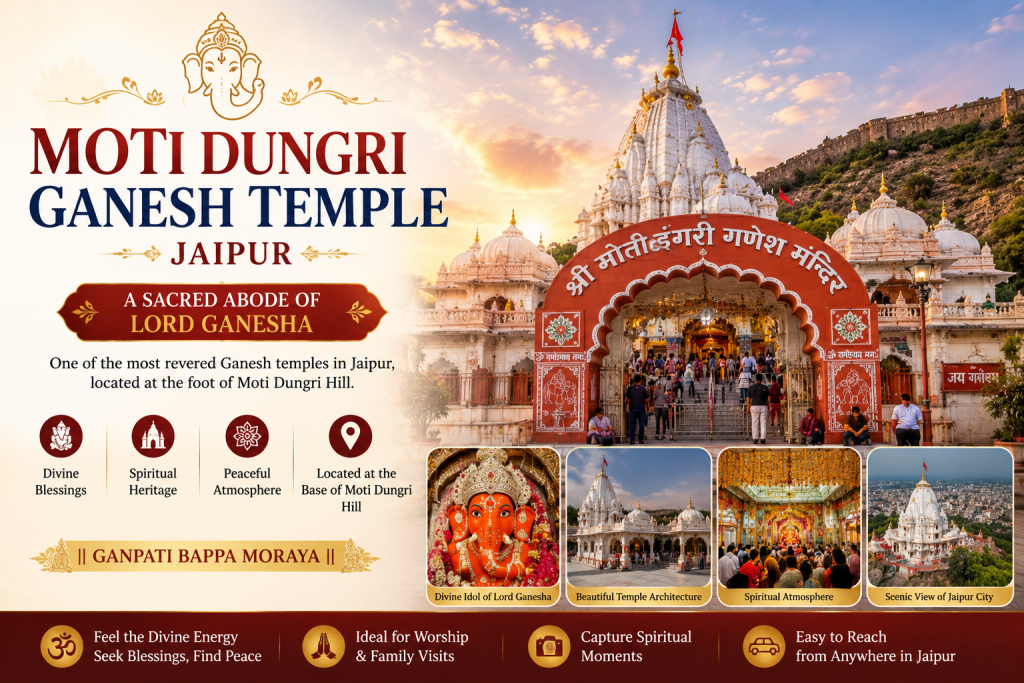
3. Moti Dungri Ganesh Temple
Perched atop a small hill next to the Moti Dungri Fort, this temple is among the most visited Famous Ganesh Temple in Jaipur. What makes it truly special is the idol of Lord Ganesha, which is more than 500 years old and was originally brought from Gujarat. The temple structure itself was built in 1971, but the idol carries centuries of devotion within it.
One interesting detail that sets this temple apart: the trunk of the Ganesha idol here is turned to the right, which is considered particularly auspicious and rare in most Ganesha temples. Wednesdays see an especially large gathering of devotees here, and during Ganesh Chaturthi, the entire hillside becomes a sea of people.
The view from the hilltop also gives you a nice panoramic look at Birla Mandir, which sits right at the base of the hill. Distance from city center: approximately 6 km.
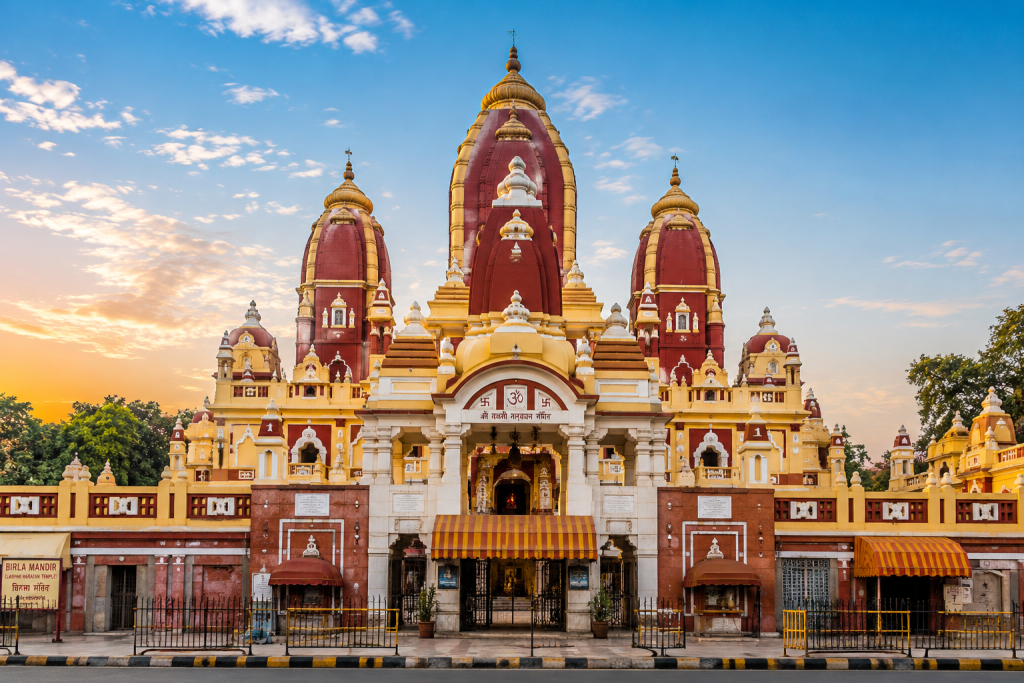
4. Birla Mandir (Laxmi Narayan Temple)
One of the most photographed structures in Jaipur, the Birla Mandir or Laxmi Narayan Temple sits at the foot of Moti Dungri Hill. Built entirely in white marble by the Birla family in 1988, this temple is dedicated to Lord Vishnu and Goddess Laxmi. The idols of both deities are carved from a single piece of marble, which is a remarkable feat in itself.
What makes Birla Mandir stand out from traditional Hindu temples is its inclusive character. Its interior panels display not only Hindu scriptures but also figures from other religious traditions, including Jesus Christ and Socrates. It even has stained glass windows depicting scenes from Indian mythology, something rarely seen in Hindu places of worship.
The Maharashtra of Jaipur gave the land for this temple to the Birla family for a symbolic sum of just one rupee. The temple is a must-visit among the best temples in Jaipur for both its spiritual and architectural value.
Timings: 6:00 AM to 11:30 AM & 4:00 PM to 8:00 PM
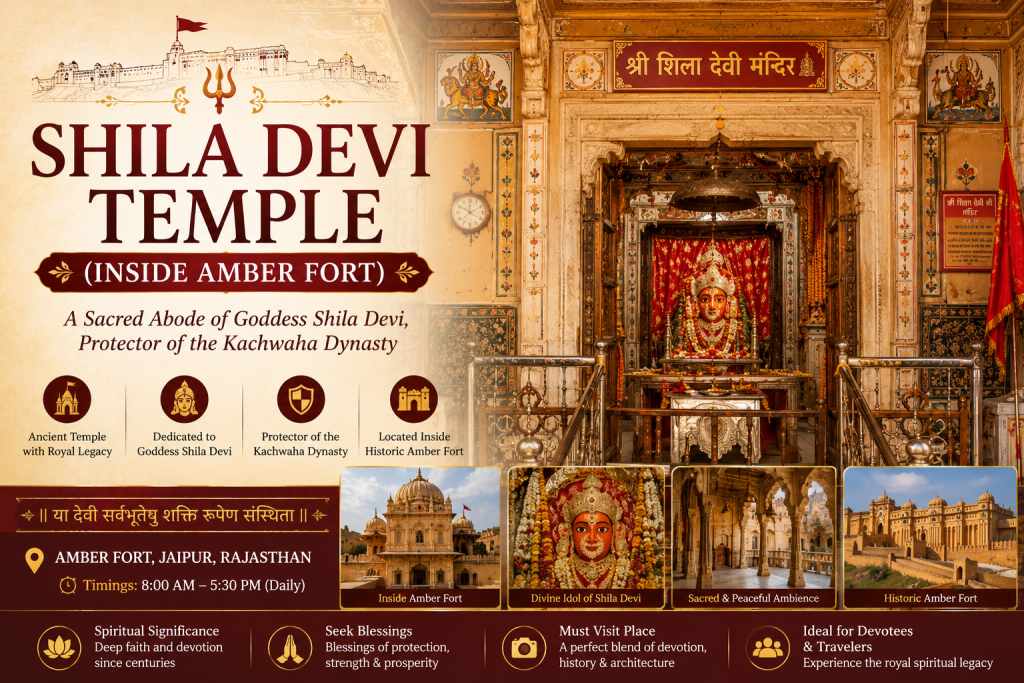
5. Shila Devi Temple (Inside Amber Fort)
Nestled within the majestic Amber Fort, the Shila Devi Temple is a revered shrine dedicated to Goddess Durga, attracting devotees and visitors alike with its spiritual significance and historic charm. The idol here is believed to have been brought from Jessore (present-day Bangladesh) in the 16th century. According to legend, the idol was found in the form of a stone slab or shila, and hence the temple takes its name from it.
This temple holds great historical importance as it was patronized by the Kachwaha Rajput kings, and it remains one of the deeply revered Jaipur religious places for Goddess devotees. Navratri celebrations here are particularly elaborate and draw large crowds.
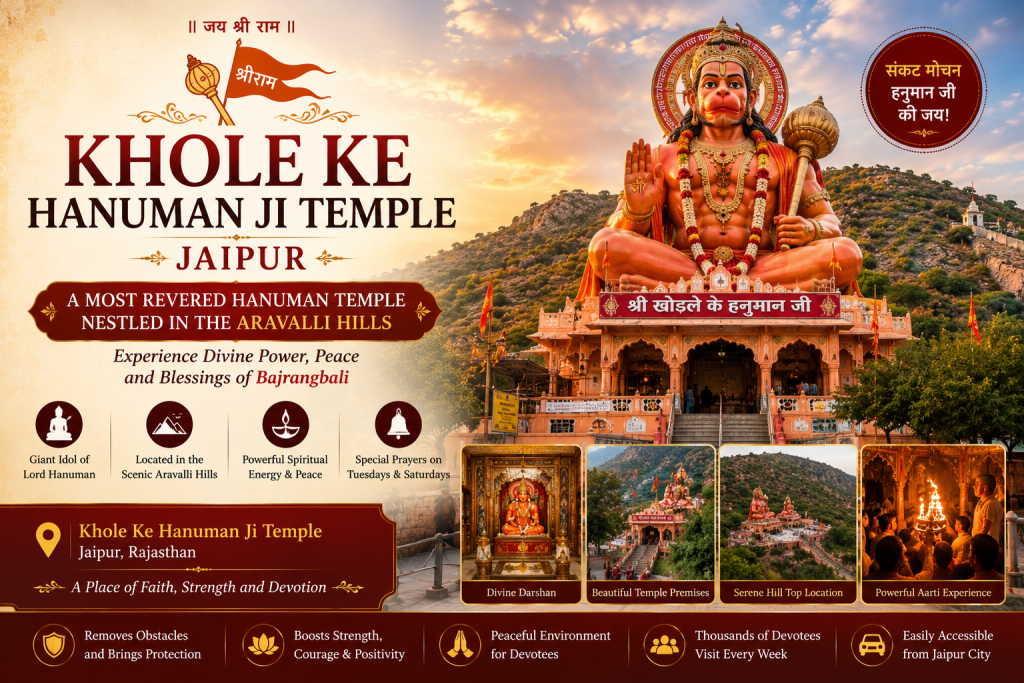
6. Khole Ke Hanuman Ji Temple
Located on the Delhi bypass at Lakshman Dungri, this temple is dedicated to Lord Hanuman and is highly revered by the locals of Jaipur. The temple sits atop a hillock and offers panoramic views of the surrounding hills and landscape. The sanctum inside is large enough to accommodate around 500 devotees at one time.
Tuesdays and Saturdays see the highest number of visitors, as these days are considered auspicious for worshipping Lord Hanuman. Timings: 6:00 AM to 8:30 PM.
7. ISKCON Temple Jaipur
The ISKCON Temple in Jaipur, also dedicated to Lord Krishna, is a modern spiritual center that blends traditional temple architecture with contemporary design. Managed by the International Society for Krishna Consciousness, this temple organizes daily prayers, bhajans, cultural programs, and community events. It is a welcoming place for devotees and curious visitors alike.
Temples Near Jaipur Worth Visiting
If you have extra time and want to explore beyond the city, some incredible temples near Jaipur are well worth the drive.
Khatu Shyam Ji Temple (Approx. 90-116 km from Jaipur)
Located in the Sikar district, Khatu Shyam Ji Temple is one of the most revered pilgrimage sites in all of Rajasthan. Dedicated to Barbarika (a form of Lord Krishna), the idol here is made of pure white Makrana marble. The temple attracts lakhs of devotees, especially on Dwadashi and during the Phalguna Mela. A taxi from Jaipur to Khatu Shyam Ji takes roughly 2 to 2.5 hours.
Salasar Balaji Temple (Approx. 170 km from Jaipur)
Located in the Churu district, this temple is dedicated to a unique form of Lord Hanuman whose idol is self-manifested (Swayambhu) and uniquely features a beard and moustache. The temple draws thousands of devotees daily and is one of the most important Hanuman shrines in North India. Many pilgrims combine a visit to Khatu Shyam Ji and Salasar Balaji in a single day trip from Jaipur.
Pushkar Brahma Temple (Approx. 145 km from Jaipur)
One of the very few Brahma temples in the world, the Pushkar Brahma Mandir is a once-in-a-lifetime visit for any devotee. The sacred Pushkar Lake surrounding the temple adds a mystical dimension to the entire experience.
Best Time to Visit Temples in Jaipur
October to March is the best time to visit Jaipur for temple tours. The weather is pleasant during these months, making it comfortable to walk between temple complexes and climb hilltop shrines. Festival periods like Janmashtami (August-September), Ganesh Chaturthi (August-September), and Navratri (October and March-April) bring the temples to life with special rituals and celebrations.
How to Reach Jaipur Temples by Taxi
Jaipur’s temples are spread across different parts of the city and its surroundings. The most convenient way to cover all must visit temples in Jaipur in one day is by booking a reliable cab or taxi service. Rajasthan Taxi Rental offers comfortable and affordable cab services for temple tours within Jaipur as well as day trips to temples near Jaipur like Khatu Shyam Ji, Salasar Balaji, and Pushkar.
Tips for Visiting Jaipur Temples
- Remove your footwear before entering any temple.
- Dress modestly with shoulders and knees covered.
- Photography is allowed in most temples but restricted inside the inner sanctum.
- Carry small change for donations and prasad.
- Visit early morning to avoid crowds and experience the morning aarti.
- Plan temple tours on weekdays to avoid the large weekend rush.
Frequently Asked Questions
Q1. Which is the most famous temple in Jaipur?
Govind Dev Ji Temple inside the City Palace complex is widely regarded as the most famous and spiritually significant temple in Jaipur. It is dedicated to Lord Krishna and draws thousands of devotees every single day.
Q2. Is there a famous Ganesh temple in Jaipur?
Yes. Moti Dungri Ganesh Temple is the most well-known Ganesh temple in Jaipur. The idol here is more than 500 years old and the temple is especially crowded on Wednesdays and during Ganesh Chaturthi.
Q3. Which are the best temples near Jaipur for a day trip?
Khatu Shyam Ji Temple in Sikar (around 90-116 km), Salasar Balaji Temple in Churu (around 170 km), and Pushkar Brahma Temple (around 145 km) are the top temples near Jaipur for a day trip by taxi.
Q4. What is the entry fee for temples in Jaipur?
Most famous temples in Jaipur including Govind Dev Ji Temple, Galtaji Temple, and Moti Dungri Ganesh Temple are free to enter. Birla Mandir also has no entry fee.
Q5. Can I visit multiple Jaipur temples in one day?
Yes, it is very much possible to visit 4 to 5 temples in Jaipur in a single day if you start early and hire a taxi. A planned temple circuit covering Govind Dev Ji, Galtaji, Moti Dungri, and Birla Mandir can easily be completed between morning and evening.