- Connect Us:
- +91-9414816181
- info@rajasthantaxirental.com

Three Jyotirlingas in Maharashtra: Complete Travel Guide for a Divine Pilgrimage

Jaipur to Chittorgarh Distance and Complete Travel Guide
July 10, 2026
Famous Temples in Rajasthan: Complete Rajasthan Temple Tour & Spiritual Travel Guide
August 4, 2026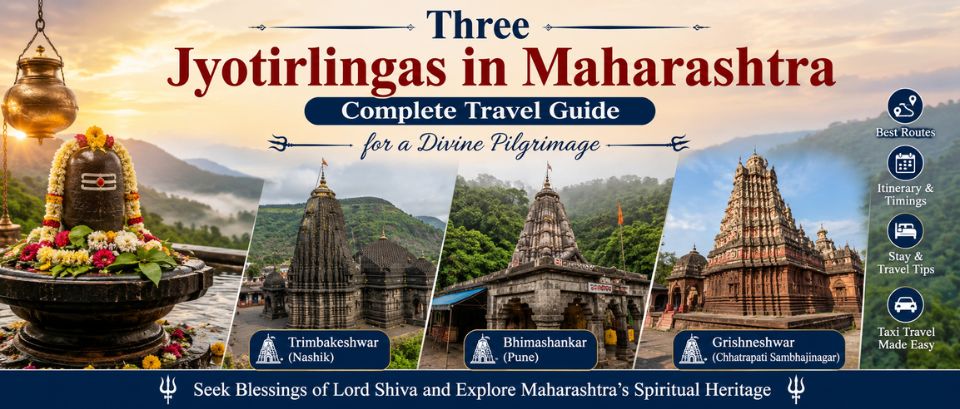
A pilgrimage is more than just visiting temples. It is an opportunity to experience faith, history, culture, and inner peace. Maharashtra is one of the few states in India that is blessed with three sacred Jyotirlingas, making it a preferred destination for Lord Shiva devotees from across the country. Every year, thousands of pilgrims travel here to seek blessings while exploring the state’s rich spiritual heritage and beautiful landscapes.
Whether you are travelling with family, senior citizens, or a group of devotees, planning your journey can make your experience comfortable and memorable. From choosing the right route to selecting the best season for travel, every small detail contributes to a hassle-free pilgrimage.
In this guide, you will discover the history, significance, travel routes, itinerary suggestions, and useful travel tips to help you plan a perfect visit to the Three Jyotirlingas in Maharashtra.
Why Maharashtra is Special for Shiva Devotees
Among the twelve sacred Jyotirlingas mentioned in Hindu traditions, Maharashtra is home to three important shrines. Their spiritual significance, historical importance, and convenient road connectivity encourage many devotees to cover all three temples during a single journey.
Apart from offering a divine experience, this pilgrimage also introduces travellers to ancient architecture, scenic mountain roads, peaceful forests, and UNESCO World Heritage monuments. Many visitors combine these temples with destinations like Shirdi, Ellora Caves, and Nashik to create a complete spiritual circuit.
The Jyotirlingas in Maharashtra are spread across different regions of the state, allowing pilgrims to experience both religious devotion and the natural beauty of western India.
What is a Jyotirlinga?
According to Hindu scriptures, Lord Shiva manifested himself as an infinite pillar of divine light to demonstrate that his power has no beginning and no end. These sacred manifestations are known as Jyotirlingas, where “Jyoti” means light and “Linga” represents Lord Shiva.
Each Jyotirlinga has its own legend, traditions, and unique religious importance. Devotees believe that visiting these holy shrines with sincere faith brings spiritual peace, removes obstacles, and blesses families with happiness and prosperity.
Among the twelve sacred temples, the Maharashtra Jyotirlinga pilgrimage is considered one of the most convenient because all three temples can be covered through a well-planned road journey.
The Three Sacred Jyotirlingas
1. Trimbakeshwar Jyotirlinga
Located around 30 kilometres from Nashik, Trimbakeshwar Temple is one of the most respected Shiva temples in India. Surrounded by the Brahmagiri Hills, this sacred temple attracts pilgrims throughout the year for both worship and religious rituals.
One of the most unique features of Trimbakeshwar is its sanctum, where three small lingas represent Lord Brahma, Lord Vishnu, and Lord Shiva. This rare representation makes the temple different from other Jyotirlingas across India.
The temple is also closely associated with the origin of the Godavari River, which is considered one of India’s holiest rivers. Because of this connection, many devotees perform sacred rituals here for the peace of their ancestors.
History of Trimbakeshwar Temple
The history of Trimbakeshwar dates back several centuries. Although the temple has ancient origins, the present structure was rebuilt during the eighteenth century by Peshwa Balaji Baji Rao using black basalt stone. The temple showcases traditional Hemadpanthi architecture with beautifully carved pillars, decorative walls, and intricate sculptures that reflect the craftsmanship of that era.
Over the centuries, Trimbakeshwar has remained one of the most important pilgrimage centres in western India.
Religious Importance
Devotees visit Trimbakeshwar for several special religious ceremonies, including:
- Narayan Nagbali Puja
- Kaal Sarp Dosh Puja
- Tripindi Shraddha
- Pitru Dosh rituals
- Rudrabhishek
People from different parts of India come here specifically to perform these rituals under the guidance of temple priests.
Temple Timings
General Darshan Timing:
Morning: 5:30 AM
Evening: 9:00 PM
Timings may change during major festivals and special occasions, so visitors should verify the latest schedule before planning their journey.
Best Time to Visit
October to March offers pleasant weather, making sightseeing and temple visits comfortable.
During Shravan month and Mahashivratri, the temple witnesses grand celebrations and attracts thousands of devotees. While the spiritual atmosphere is extraordinary during these festivals, visitors should be prepared for longer waiting times.
Nearby Attractions
A visit to Trimbakeshwar can be combined with several nearby attractions.
- Brahmagiri Hills
- Kushavarta Kund
- Godavari River Origin
- Panchavati
- Sita Gufa
- Sula Vineyards
These places make Nashik an ideal destination for both pilgrimage and sightseeing.
Distance from Major Cities
Mumbai to Trimbakeshwar: Approximately 180 km
Pune to Trimbakeshwar: Approximately 240 km
Shirdi to Trimbakeshwar: Approximately 120 km
Comfortable road connectivity makes the temple easily accessible by private taxi or personal vehicle.
Travel Tip
If you plan to perform any special puja, arrive early in the morning and complete the booking process before the temple becomes crowded. Booking a private taxi gives you enough flexibility to spend additional time exploring Nashik’s religious and cultural attractions before continuing your journey.
2. Bhimashankar Jyotirlinga
Nestled in the lush Sahyadri Hills of Pune district, Bhimashankar Jyotirlinga is one of the most peaceful Shiva temples in India. Surrounded by dense forests and scenic valleys, the temple offers a unique combination of spirituality and natural beauty. The calm environment makes it an ideal destination for devotees seeking both divine blessings and a refreshing escape from busy city life.
The temple is also the source region of the Bhima River, which later joins the Krishna River. Its location inside the Bhimashankar Wildlife Sanctuary adds to the charm of the pilgrimage, attracting both pilgrims and nature enthusiasts.
History of Bhimashankar Temple
According to Hindu mythology, a powerful demon named Bhima created fear and destruction in the region. The devotees prayed to Lord Shiva for protection. Lord Shiva appeared, defeated the demon, and manifested himself as a Jyotirlinga to bless his followers. This divine event is believed to have given the temple its name.
The present temple reflects the traditional Nagara style of architecture with beautifully carved stone walls and ancient sculptures. Over the centuries, several rulers and devotees contributed to its preservation and development.
Religious Importance
Bhimashankar is one of the most revered pilgrimage sites dedicated to Lord Shiva, attracting devotees from across India throughout the year. Pilgrims visit the temple to offer prayers, participate in Abhishek and Rudrabhishek ceremonies, and seek divine blessings. During Mahashivratri and the sacred month of Shravan, the temple witnesses a remarkable increase in visitors, creating a deeply spiritual and festive atmosphere.
The peaceful surroundings encourage visitors to spend time in meditation and prayer, making the experience spiritually enriching.
Temple Timings
General Darshan Timings:
Morning: 4:30 AM
Evening: 9:30 PM
Special poojas and festival schedules may slightly change the timings, so it is advisable to confirm before your visit.
Best Time to Visit
The ideal time to visit Bhimashankar is between October and March when the weather is cool and pleasant.
The monsoon season transforms the surrounding hills into a beautiful green landscape with waterfalls and mist-covered forests. Although the scenery is breathtaking, travellers should be cautious as roads can become slippery due to heavy rainfall.
Nearby Attractions
Your visit can include several beautiful destinations around the temple.
- Bhimashankar Wildlife Sanctuary
- Hanuman Lake
- Gupt Bhimashankar
- Nagphani Point
- Ahupe Waterfall
Nature lovers often spend an extra day exploring these scenic locations.
Distance from Major Cities
Mumbai to Bhimashankar: Approximately 220 km
Pune to Bhimashankar: Approximately 110 km
Nashik to Bhimashankar: Approximately 210 km
Travelling by road is the most convenient option because it allows you to enjoy the picturesque mountain routes while travelling comfortably.
3. Grishneshwar Jyotirlinga
Located near the world-famous Ellora Caves in Chhatrapati Sambhajinagar district, Grishneshwar is the twelfth and final Jyotirlinga in the traditional sequence of the sacred shrines. Despite being one of the smaller temples, it attracts thousands of devotees every day because of its historical importance and peaceful atmosphere.
This temple beautifully combines devotion, history, and architecture, making it one of the highlights of the pilgrimage.
The visit to Grishneshwar is often combined with Ellora Caves, Daulatabad Fort, and Bibi Ka Maqbara, allowing travellers to enjoy both spiritual and historical attractions during a single journey.
History of Grishneshwar Temple
The temple has been rebuilt several times after facing damage during different periods of history. The present structure was restored in the eighteenth century by the great Maratha queen Ahilyabai Holkar, who also renovated several famous temples across India.
Constructed using red volcanic stone, the temple features detailed carvings of gods, goddesses, flowers, animals, and mythological scenes. Every pillar and wall reflects the artistic excellence of ancient Indian craftsmen.
Religious Importance
According to legend, Lord Shiva appeared here to bless his devoted follower Ghushma, whose unwavering faith became an example of true devotion. The temple continues to inspire millions of pilgrims who visit seeking peace, prosperity, and spiritual strength.
This temple completes the sacred journey of the 3 Jyotirlingas in Maharashtra, making it an important destination for devotees undertaking the pilgrimage.
Temple Timings
General Darshan Timings:
Morning: 5:30 AM
Evening: 9:30 PM
During festivals and special occasions, timings may vary depending on temple management.
Best Time to Visit
The winter season from October to March is considered the most comfortable period for sightseeing and temple visits.
Visitors planning to explore Ellora Caves should allocate at least half a day for the monuments, as the archaeological complex contains numerous caves and sculptures worth exploring.
Nearby Attractions
Some popular places near Grishneshwar include:
- Ellora Caves
- Daulatabad Fort
- Bibi Ka Maqbara
- Panchakki
- Aurangabad Caves
These attractions make the region one of Maharashtra’s most visited cultural destinations.
Distance from Major Cities
Aurangabad City Centre to Grishneshwar: Approximately 30 km
Nashik to Grishneshwar: Approximately 175 km
Pune to Grishneshwar: Approximately 235 km
The roads connecting these destinations are well maintained, making travel by taxi both comfortable and convenient.
Why Visit All Three Temples in One Journey?
Many devotees prefer covering all three temples in a single pilgrimage because it allows them to experience Maharashtra’s spiritual heritage in a well-planned itinerary. The journey offers much more than temple visits. Travellers pass through scenic hills, historic cities, forests, and culturally rich towns, making every part of the trip memorable.
A road trip also provides flexibility to stop at local attractions, enjoy regional cuisine, and travel at your own pace without depending on public transport schedules.
Complete Route to Cover the Three Jyotirlingas
A road trip is the most convenient way to complete this pilgrimage. The highways connecting the temples are well maintained, allowing travellers to enjoy a comfortable journey while visiting nearby attractions along the way.
Mumbai → Bhimashankar → Nashik (Trimbakeshwar) → Chhatrapati Sambhajinagar (Grishneshwar)
Depending on your starting point, you can choose a route that saves both time and travel distance.
Route from Mumbai
Approximate Total Distance: 650 to 700 km
Recommended Duration: 3 Days
Route from Pune
Pune → Bhimashankar → Nashik → Grishneshwar
Approximate Total Distance: 550 to 600 km
Recommended Duration: 3 Days
Route from Jaipur
Jaipur → Udaipur → Vadodara → Nashik → Trimbakeshwar → Bhimashankar → Grishneshwar
This route is suitable for travellers planning a long spiritual road trip with family or friends.
Route from Delhi
Delhi → Jaipur → Udaipur → Vadodara → Nashik → Bhimashankar → Grishneshwar
Travellers from North India often include Shirdi in their itinerary before returning home.
Distance Between the Temples
The road connectivity between the temples is excellent, making it easy to complete the pilgrimage without unnecessary travel.
| Route | Approximate Distance |
| Trimbakeshwar to Bhimashankar | 210 km |
| Bhimashankar to Grishneshwar | 330 km |
| Trimbakeshwar to Grishneshwar | 175 km |
Travel time may vary depending on road conditions and traffic.
Suggested 3 Day Itinerary
Day 1
Start early from Mumbai or Pune.
Visit Bhimashankar Temple during the morning.
Enjoy the beautiful Sahyadri landscape before travelling towards Nashik.
Stay overnight in Nashik.
Day 2
Wake up early for Trimbakeshwar Darshan.
Visit Kushavarta Kund and Brahmagiri Hills.
Have lunch in Nashik before leaving for Chhatrapati Sambhajinagar.
Check into your hotel and relax.
Day 3
Visit Grishneshwar Temple in the morning.
Explore Ellora Caves.
If time permits, visit Daulatabad Fort or Bibi Ka Maqbara before returning.
This itinerary is ideal for families who prefer a comfortable pace without rushing.
Suggested 4 Day Itinerary
Day 1
Arrive in Pune or Mumbai.
Travel to Bhimashankar.
Night stay near Bhimashankar or Pune.
Day 2
Drive to Nashik.
Visit Trimbakeshwar Temple.
Explore Panchavati and Sita Gufa.
Night stay in Nashik.
Day 3
Travel to Chhatrapati Sambhajinagar.
Visit Ellora Caves.
Relax at the hotel.
Day 4
Early morning Darshan at Grishneshwar Temple.
Visit Daulatabad Fort.
Return to your hometown or continue your journey to Shirdi.
This itinerary gives enough time for sightseeing without making the journey hectic.
Best Time to Visit
The weather plays an important role in making your pilgrimage enjoyable.
October to March: This is considered the best season because temperatures remain pleasant throughout the day. Sightseeing becomes comfortable, and road travel is easier.
April to June: Summer temperatures can become quite high, especially during the afternoon. Travellers should begin their journey early in the morning and stay hydrated.
July to September: The monsoon season covers the Sahyadri Hills with lush greenery. Bhimashankar becomes especially beautiful during this period. However, occasional heavy rainfall may increase travel time.
During Festivals
Mahashivratri and the holy month of Shravan attract a large number of devotees. The spiritual atmosphere is extraordinary, but visitors should expect longer queues and book hotels and transport in advance.
Where to Stay During the Journey
Choosing accommodation near the temples helps reduce travel time and allows you to attend early morning darshan.
Near Trimbakeshwar: Nashik offers a wide range of budget hotels, premium hotels, dharamshalas, and guest houses suitable for every type of traveller.
Near Bhimashankar: You can find comfortable hotels and resorts in Pune as well as simple guest houses near the temple area.
Near Grishneshwar: Chhatrapati Sambhajinagar has numerous hotels ranging from budget accommodation to luxury properties. Staying in the city also allows you to explore Ellora Caves comfortably.
Booking accommodation in advance is recommended during weekends and religious festivals.
Estimated Budget for the Trip
Your total travel expense depends on the number of travellers, vehicle type, accommodation, and sightseeing preferences.
Approximate expenses include:
- Hotel accommodation
- Taxi or fuel charges
- Temple donations and special poojas
- Meals and refreshments
- Entry tickets for monuments like Ellora Caves
Travelling with family or a group often reduces the overall cost per person while making the journey more enjoyable.
Combine Your Pilgrimage with Other Sacred Destinations
Many devotees extend their journey by visiting nearby religious destinations.
Popular additions include:
- Shirdi Sai Baba Temple
- Shani Shingnapur
- Ellora Caves
- Daulatabad Fort
- Panchavati
- Saptashrungi Temple
Adding these destinations transforms your pilgrimage into a complete spiritual and cultural tour of Maharashtra.
Important Travel Tips for a Comfortable Pilgrimage
A little planning can make your journey smooth and enjoyable. Before starting your trip, keep these useful tips in mind.
- Start your journey early in the morning to avoid city traffic.
- Carry a valid photo ID for hotel check-in and temple requirements.
- Wear comfortable and modest clothes suitable for temple visits.
- Keep drinking water, light snacks, and essential medicines during the journey.
- Follow the temple guidelines regarding photography, footwear, and mobile phone usage.
- Book your hotel and taxi in advance if you are travelling during Mahashivratri or the Shravan month.
- Senior citizens should plan regular breaks during long road journeys.
- Always check the latest temple timings before your visit, as they may change during festivals.
A private taxi gives you the flexibility to stop for meals, rest, or sightseeing whenever required, making the journey more relaxing for families and elderly travellers.
Why Choose Rajasthan Taxi Rental for Your Pilgrimage?
A pilgrimage should be peaceful, and transportation plays an important role in ensuring a hassle-free experience. Instead of changing buses or waiting for train connections, travelling by taxi allows you to focus on your spiritual journey.
Rajasthan Taxi Rental offers comfortable vehicles for religious tours across Maharashtra and other parts of India. Whether you are travelling alone, with family, or in a larger group, you can choose the vehicle that best suits your needs.
Benefits of Booking with Rajasthan Taxi Rental
- Well-maintained and clean vehicles
- Experienced drivers familiar with long-distance routes
- Flexible travel schedule
- Pickup and drop-off according to your convenience
- Comfortable options for families, couples, and groups
- Transparent pricing with no unnecessary hidden charges
- Multiple vehicle choices including Sedan, SUV, Innova Crysta, Tempo Traveller, and Luxury Cars
With a dedicated taxi, you can also include nearby attractions such as Shirdi, Ellora Caves, Daulatabad Fort, Panchavati, and Shani Shingnapur without worrying about public transport schedules.
Make Your Journey More Memorable
A visit to these sacred temples is not only about seeking blessings but also about experiencing the culture, traditions, and natural beauty of Maharashtra. From the peaceful forests around Bhimashankar to the ancient architecture of Grishneshwar and the spiritual atmosphere of Trimbakeshwar, every destination offers something unique.
Travelling by road allows you to witness changing landscapes, enjoy local cuisine, and spend quality time with your loved ones while creating unforgettable memories.
Whether you are planning your first pilgrimage or revisiting these sacred shrines, proper planning will help you complete the journey comfortably and without unnecessary stress.
Conclusion
Visiting the Famous Jyotirlingas in Maharashtra is a spiritually enriching experience that combines devotion, history, and scenic travel. Each temple has its own unique story, architectural beauty, and religious importance, making this pilgrimage one of the most meaningful journeys for Lord Shiva devotees.
With proper planning, comfortable transportation, and a well-designed itinerary, you can complete the pilgrimage without rushing and also explore nearby attractions along the way.
If you are looking for a reliable travel partner, Rajasthan Taxi Rental provides comfortable vehicles and experienced drivers to help you enjoy a safe, convenient, and memorable road trip across Maharashtra.
Frequently Asked Questions
The three Jyotirlingas are Trimbakeshwar near Nashik, Bhimashankar near Pune, and Grishneshwar near Chhatrapati Sambhajinagar. These temples are among the twelve sacred Jyotirlingas dedicated to Lord Shiva.
Most travellers complete the journey in 3 to 4 days. If you also wish to visit Shirdi, Ellora Caves, Daulatabad Fort, or other nearby attractions, you can plan a 5-day itinerary for a more relaxed experience.
The months from October to March are considered the best for comfortable weather and road travel. Mahashivratri and the Shravan month are also popular, but they usually attract larger crowds.
Yes. A private taxi offers greater flexibility, saves time, and allows you to visit multiple destinations without depending on bus or train schedules. It is especially convenient for families, senior citizens, and group travellers.
Yes. Many pilgrims combine Trimbakeshwar, Bhimashankar, Grishneshwar, Shirdi, Ellora Caves, Daulatabad Fort, and Panchavati in a single road trip, making the journey both spiritual and memorable.